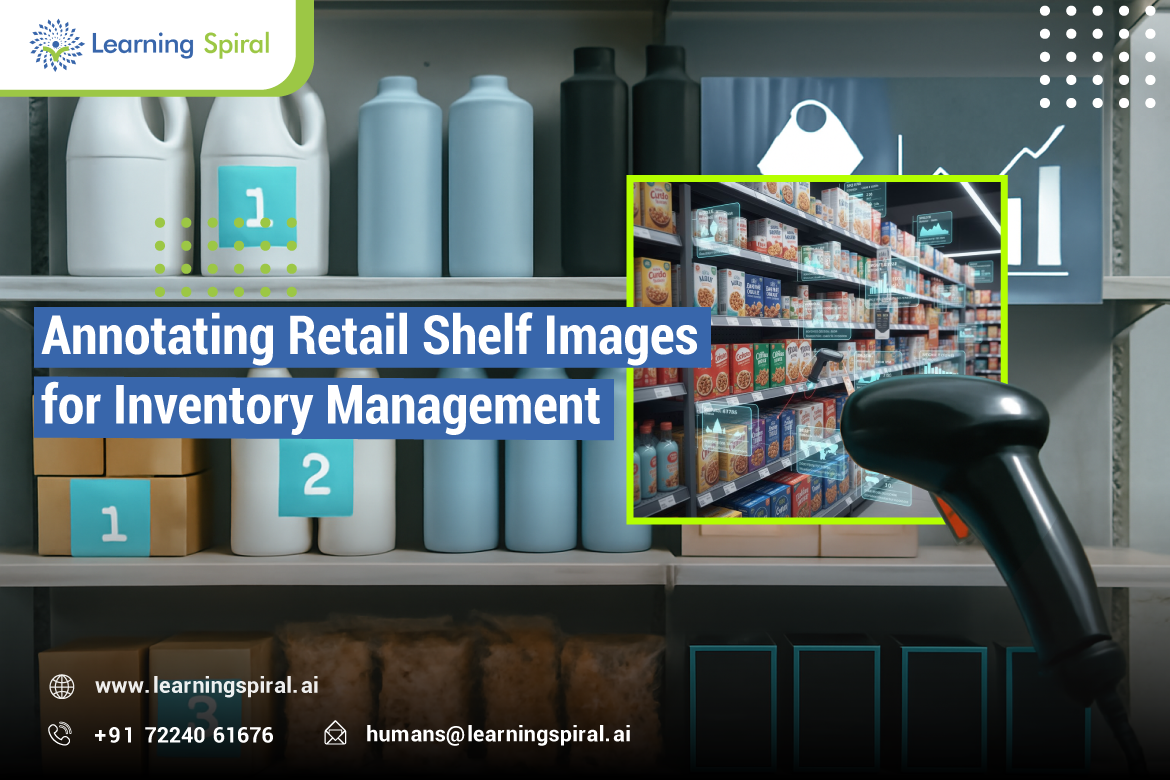
In the age of AI-driven automation, efficient inventory management has become a strategic priority for retailers worldwide. One key innovation fueling this transformation is the annotation of retail shelf images. Using computer vision and data annotation, retailers can now automate the detection of product placement, pricing discrepancies, stockouts, and compliance violations with unprecedented accuracy.
Retail shelf image annotation involves tagging various elements—like product logos, barcodes, shelf spaces, and packaging details—on high-resolution images of store shelves. These labeled datasets power advanced machine learning algorithms that monitor shelf conditions in real time. With AI and deep learning models continuously learning from annotated images, retailers can optimize their supply chains and improve customer satisfaction.
The role of image annotation in AI training cannot be overstated. AI models require extensive, accurately labeled datasets to identify objects, detect anomalies, and make decisions autonomously. In retail, this translates to actionable insights like real-time alerts for empty shelves, misplaced items, or incorrect labels. These insights streamline inventory audits, reduce labor costs, and ensure product availability—enhancing the overall retail experience.
Behind this innovation are specialized data labeling companies that combine domain expertise with scalable annotation platforms. Companies like Learning Spiral AI are leading the way in providing high-quality image annotation services across diverse verticals, including retail. With a team trained in handling large datasets, complex object detection, and bounding box annotations, they empower AI models to deliver consistent and reliable results.
Key technologies used in this domain include computer vision, supervised learning, image segmentation, and object detection. Combined with robust data labeling tools, these technologies turn raw visual data into smart inventory intelligence.
As retail continues to adopt AI for automation, precision, and predictive analytics, annotated shelf images will become the backbone of smarter inventory systems. Businesses investing in high-quality image annotation are already gaining a competitive edge.
In conclusion, annotating retail shelf images is not just about labeling products—it’s about unlocking the full potential of AI for dynamic, data-driven inventory management.