

16
OctDiscover the seven essential steps for preparing, annotating, validating and managing machine learning datasets. Learn how data quality, expert labeling and human review help create reliable AI training data.

14
OctInconsistent labels quietly break computer vision models. This guide explains how to design clean categories, useful attributes and airtight class definitions so your image classification datasets stay accurate at scale.

29
SepData labeling and data annotation are often used interchangeably, but they can serve different purposes in an AI training pipeline. Learn their key differences, techniques, applications, and when your project needs each.

15
SepIn elite sport, the difference between reacting in time and reacting too late can be measured in milliseconds. A goalkeeper responding to a penalty kick, a cricket batter picking up the ball after release, a sprinter leaving the blocks, or a tennis player returning a fast serve all depend on one critical capability: reaction time. For coaches[…]

07
SepAutonomous vehicles must interpret pedestrians, lanes, vehicles, signals and unexpected road events in milliseconds. Discover the toughest image annotation challenges behind autonomous driving datasets—and the practical techniques that help AI perception models become safer and more reliable.

02
SepHuman in the Loop brings human judgment into AI training and decision-making. Learn how HITL improves data quality, manages edge cases and builds more reliable AI systems.

02
SepImage annotation helps robots identify objects, understand environments and make informed decisions. Explore its methods, applications, challenges and role in building reliable robotic vision systems.

20
AugImagine teaching a robot to make coffee — not by showing it a video from across the room, but through your own eyes as you reach for the mug. That’s egocentric data. And it’s changing how AI learns to move through the real world. As a leading data annotation company, we’ve watched this shift happen in real[…]

23
JulAI models often fail not because the algorithm is weak, but because the training data is incomplete, inconsistent or incorrectly labeled. Data annotation converts raw images, videos, text, audio and sensor data into structured examples that help machine learning systems understand real-world information accurately.
08
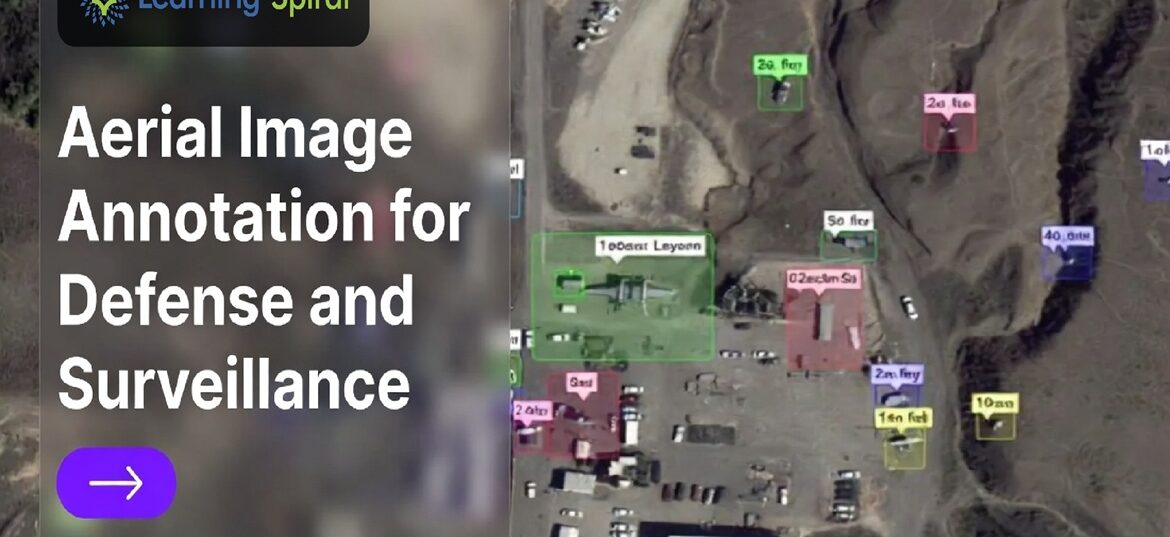
JulDefense and surveillance programs increasingly run on aerial imagery, yet most computer vision models still stumble on tiny, cluttered, top-down objects. The gap usually isn’t the algorithm — it’s the annotation pipeline underneath it. Here’s how disciplined aerial image annotation closes that gap.