In today’s fast-paced logistics and supply chain environment, ensuring the efficiency and security of loading docks is critical. Loading dock monitoring systems leverage advanced technologies to track vehicle movements, detect anomalies, and optimize operations. A foundational element in developing these AI-powered systems is manual annotation — the process of precisely labeling data to train accurate and reliable models.
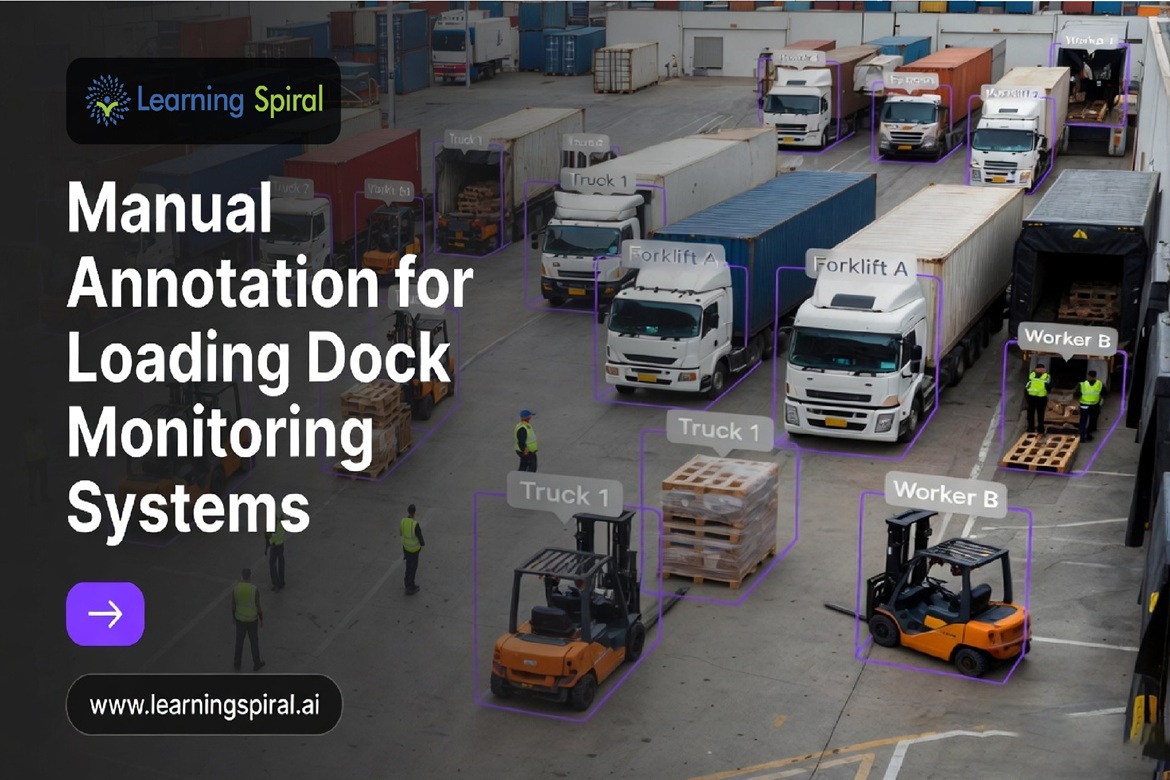
Manual annotation involves human experts meticulously tagging video footage, images, or sensor data from loading docks to identify vehicles, personnel, and activities. This detailed data labeling forms the backbone of training machine learning algorithms that power computer vision capabilities within monitoring systems. For example, annotators might label trucks backing into bays, forklifts moving cargo, or identify safety hazards, enabling the AI to recognize these scenarios automatically in real-time.
Incorporating diverse data types such as video streams, images, and even Lidar annotation enhances the system’s robustness. Accurate video annotation and image labeling allow AI models to perform complex tasks like object detection, behavior analysis, and event prediction — all essential for enhancing dock safety and operational efficiency.
Creating high-quality AI training datasets through manual annotation is labor-intensive but indispensable. These curated datasets enable the development of scalable and intelligent AI-powered solutions tailored to the logistics sector.
At Learning Spiral AI, we specialize in providing comprehensive annotation services that include data annotation, data labeling, and multi-modal annotation techniques. Our expertise ensures that loading dock monitoring systems and other industrial AI applications benefit from precise, scalable, and reliable training data — empowering smarter, safer, and more efficient operations.