How to Choose Between Manual and Automated Data Annotation?
Selection between both manual and automated annotation should be made carefully based on the specific needs of the project. Here are some factors to consider when choosing between them:
- Accuracy: Manual data annotation has more accuracy than automated data annotation. This is because humans are able to understand the context of the data and make better decisions about how to label it. Various factors like emotions, common sense, and other factors are also included here which are impossible to assimilate by a machine.
- Speed: Automated data annotation is typically faster than manual data annotation. This is because computers can process data much faster than humans. Plus, machines don’t require breaks or time to take rest.

- Cost: Automated data annotation is typically cheaper than manual data annotation. This is because computers. In the field of artificial intelligence, data annotation is a must. Data annotation is the process of assigning labels to data so that it can be used to train machine learning models. It can be done manually or automatically and is required to label elements like text, image, audio, or video. Let’s discuss how manual and automated data annotation differ from each other.
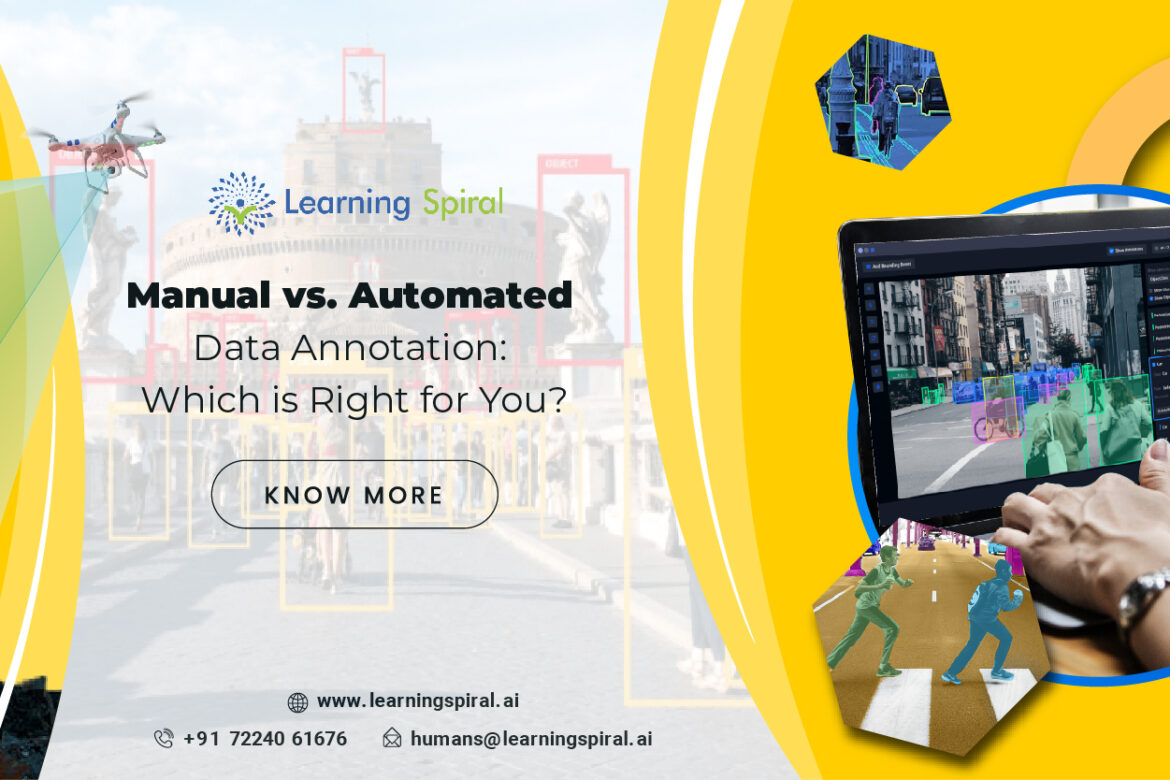
- Manual annotation: This is the process where humans label the required data. This can be done by a team of experts or by crowdsourcing the task to a large group of people. Manual data annotation is typically more accurate than automated data annotation, but it is also more time-consuming and expensive.
- Automated annotation: It is the process of using computer algorithms or software to label the data. This can be done using a variety of techniques, such as machine learning and Natural Language Processing (NLP). Automated data annotation is typically faster and cheaper than manual data annotations, but it is not always as accurate.
- Do not require the same level of training and supervision as humans.
- Complexity of the data: Some data is more complex than others and may require human intervention to be labeled accurately. For example, images that contain multiple objects or text that is ambiguous may be difficult to label automatically. This is true for vice versa cases as well.
- Availability of resources: If you have a limited budget or time constraints, then automated data annotation may be a better option. However, if you need to ensure the highest level of accuracy, then manual data annotation may be the better choice.
Ultimately, the best way to decide which data annotation method is right for you is to experiment with both methods and see which one works best for your specific project. To know more, contact Learning Spiral Pvt. Ltd. They will help you find the best solution as well as give you great options for data annotation.