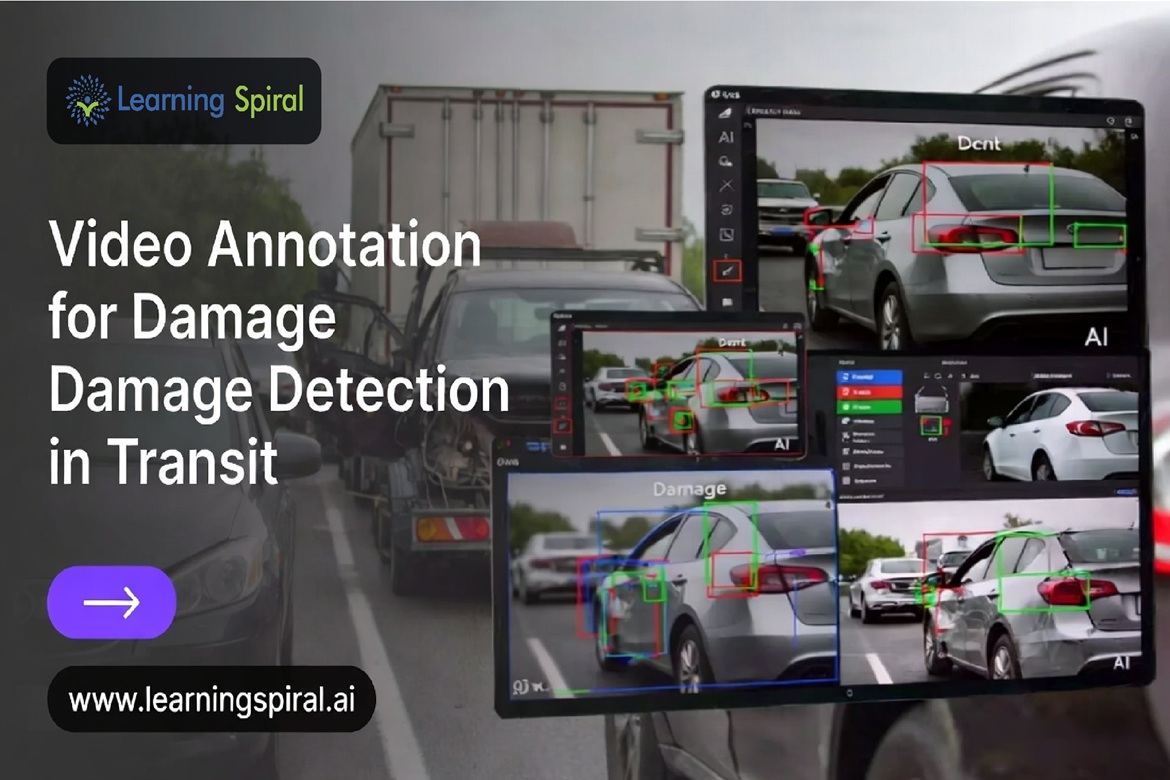
In today’s fast-paced logistics and transportation industry, ensuring the safe delivery of goods is paramount. One cutting-edge approach to improving transit safety and damage assessment is video annotation for damage detection. By leveraging annotated video data, AI-powered systems can automatically identify and classify damages in real-time, helping businesses reduce losses and improve operational efficiency.
Video annotation involves the precise labeling of video frames to highlight specific objects, defects, or damage patterns. This process trains machine learning models to recognize subtle signs of damage, such as dents, scratches, or cracks, during the transit process. When combined with computer vision, these models can analyze vast amounts of video footage quickly and accurately, outperforming manual inspection methods.
Creating high-quality AI training datasets through meticulous data annotation and data labeling is crucial for developing reliable damage detection algorithms. The annotated data must capture diverse scenarios and damage types to ensure robustness and adaptability in real-world environments. Beyond video, complementary techniques like image labeling, Lidar annotation, and even NLP annotation (for processing associated textual reports) enhance the AI model’s overall accuracy.
As supply chains become more complex, businesses increasingly rely on scalable and efficient annotation services to build and maintain their AI models. These services enable continuous improvement of damage detection systems, reducing false positives and negatives while optimizing resource allocation.
At Learning Spiral AI, we specialize in delivering end-to-end AI-powered solutions tailored to video annotation and damage detection needs. Our expertise in data annotation, including video annotation, image labeling, and multi-modal datasets, ensures precise and scalable AI model training. By partnering with us, organizations can accelerate the deployment of intelligent damage detection systems that safeguard transit operations and boost customer satisfaction.